


Mis à jour le
Book your stay
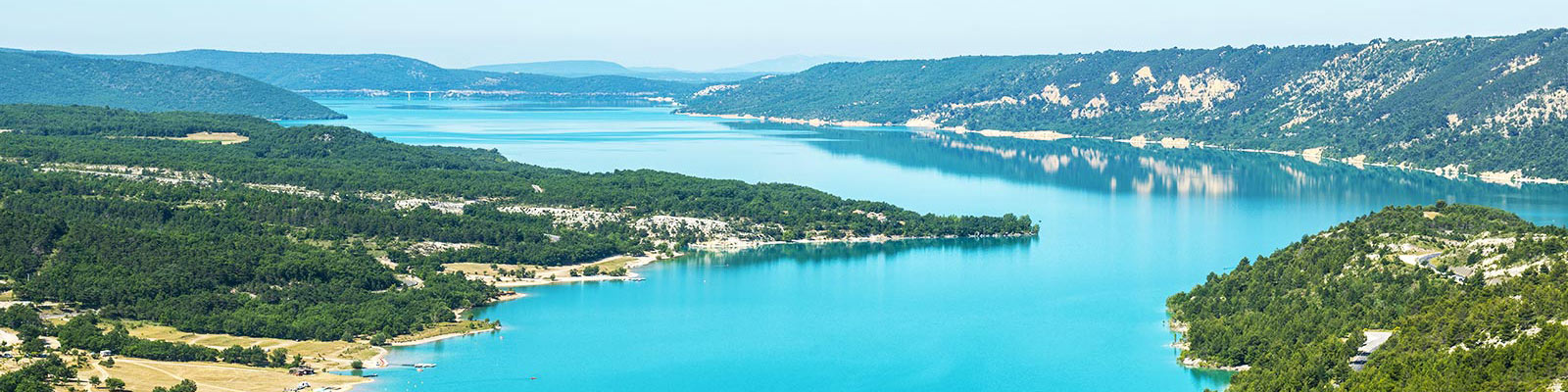
On the western shore of the large Lake Sainte-Croix, in the heart of a regional natural park in the Alpes-de-Haute-Provence in the Provence-Alpes-Côte d’Azur region, the Provençal village of Sainte-Croix-du-Verdon stretches between 440 and 670 meters above sea level, not far from our campsite near Lake Sainte-Croix.
The village center overlooks the lake from an altitude of around 500 meters. Sainte-Croix lies close to other renowned destinations in the Gorges du Verdon,
such as Moustiers-Sainte-Marie, Les-Salles-sur-Verdon, La Palud-sur-Verdon,
Gréoux-les-Bains and Bauduen, as well as Lake Esparron and Lake Quinson.
At the gateway to the Baudinard gorges, the territory of Sainte-Croix-du-Verdon also occupies the eastern end of the Valensole Plateau.
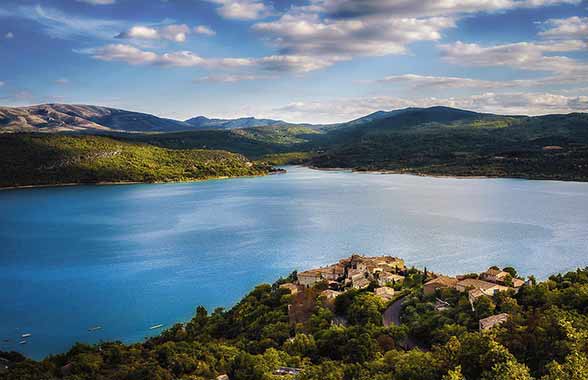
In the Middle Ages, the village of
Sainte-Croix-du-Verdon
was located at the bottom of the valley. Relocated to higher ground during the 16th century, the historic village center was not submerged when Lake Sainte-Croix was created in the 1970s, unlike the remains of the medieval village that had been abandoned for centuries.
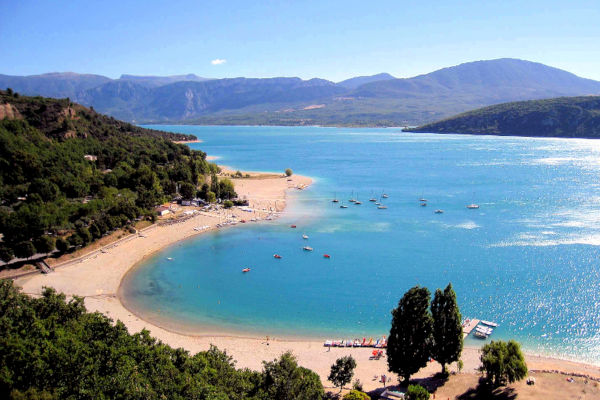
Sainte-Croix has therefore preserved its authentic, picturesque village character and its old houses, while also benefiting from the extraordinary appeal of the waters of the largest lake in the Verdon. A stunning panorama, idyllic beaches and a wide range of water and nautical activities are now part of everyday life in Sainte-Croix-du-Verdon.
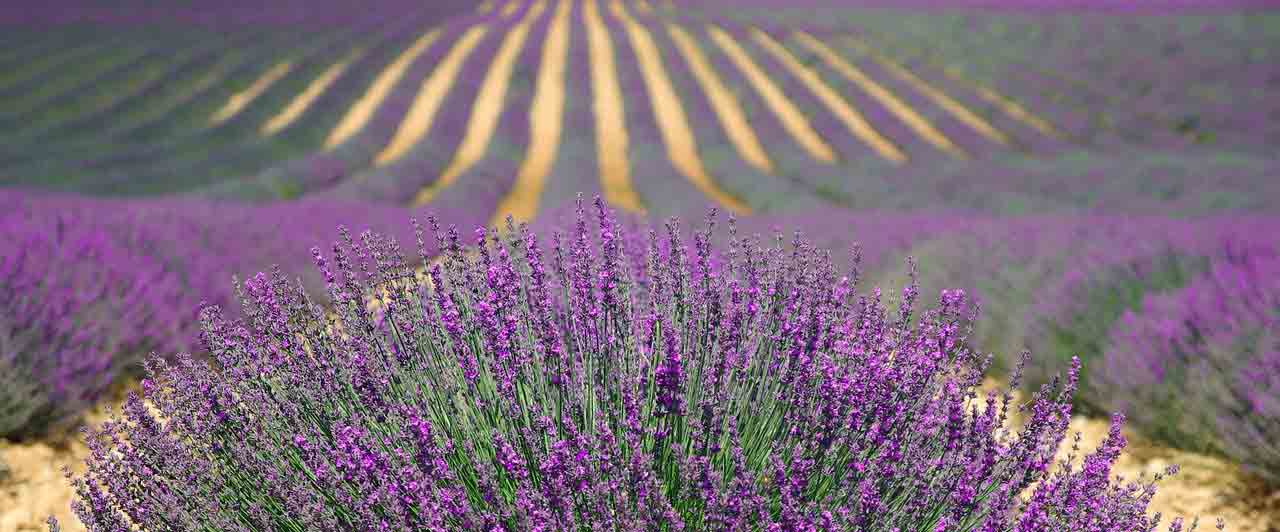
An emblem of Provence, lavender spreads its bluish hues and diffuses its fragrance across the entire Valensole Plateau.
Used around the Mediterranean since antiquity and distilled in large quantities from the 16th century onwards, lavender entered the world of fine perfumery in the 19th century.
A noble and local product, essential oil of lavender from Haute-Provence is now protected by an AOC designation.
At the eastern edge of the Valensole Plateau, Sainte-Croix-du-Verdon is an ideal starting point to discover lavender cultivation, visit a distillery and enjoy the unique landscapes created by the fields during the flowering season.
Mis à jour le