
Explore the Lavender Route
Lavender, the treasure of Provence
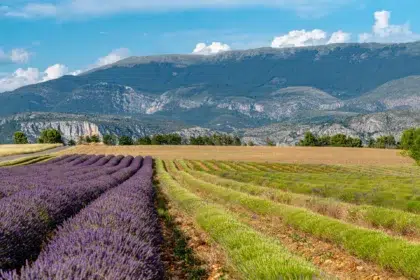
An integral part of Provençal history, lavender cultivation began as a medicinal practice before attracting the interest of the perfume industry in Grasse, leading to the boom that has made it a ubiquitous feature of the landscapes of Haute-Provence today.
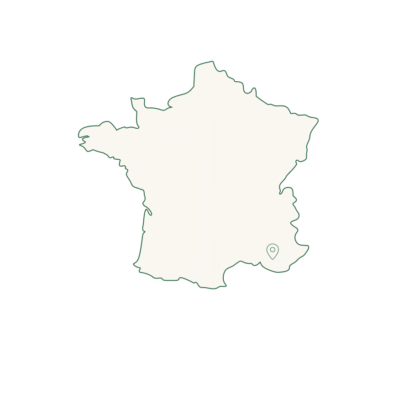
Today, lavender cultivation extends from the southern part of the Provence-Alpes-Côte d’Azur region to the Drôme Provençale, passing through the Luberon, the Alpes-de-Haute-Provence, and Mont Ventoux.
Read more
Lavender can be used fresh, dried, or distilled into lavender essential oil, depending on the benefits you wish to obtain. Known as a powerful antiseptic and effective wound healer, it also makes a pleasant home deodorizer and an effective moth repellent in closets.
Lavender-based products come in an endless variety: from soap and cosmetics to home fragrances, as well as candies and herbal teas. These aromatic herbs, with their powerful scents and recognized medicinal properties, differ in several ways: there is fine lavender (true lavender), which is what we usually see in a lavender field, as well as lavandin, a hybrid of lavender.
We also know that the Romans were already harvesting it for its medicinal properties.
The Lavender Roads
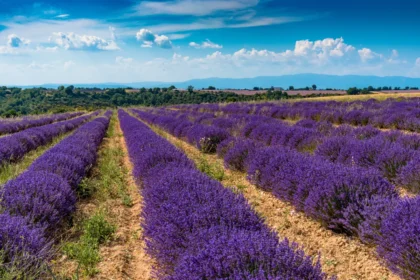
During the blooming season, the lavender fields create a magical azure landscape: from mid-June to mid-July—and sometimes as late as early August, depending on the elevation—the landscapes of Haute-Provence are adorned as far as the eye can see with the characteristic blue-to-violet hues of this fragrant flower. Several routes allow you to enjoy these unique landscapes, from the Durance Valley to the Valensole Plateau.
Read more
Exploring the villages of the Verdon region above the Sainte-Croix Lake campground, from Allemagne-en-Provence to Digne-les-Bains via Gréoux-les-Bains, lets you drive past stunning fields of mauve-colored flowers and stop at local producers who sell their products directly, including honey harvested by bees. The Valensole Plateau is home to the largest expanse of lavender fields; the area is therefore also renowned for its honeys, produced almost exclusively from bees foraging on blooming lavender.

Camping in Lavender Country
Located about 30 kilometers from Allemagne-en-Provence, near the Valensole Plateau and the small village of Sainte-Croix-du-Verdon, the Verdon Campground is an ideal destination for soaking up the scents of Provence and exploring the Lavender Route.
Enjoy a rejuvenating getaway among the lavender fields and discover the many natural benefits of this local treasure!
Where are the most beautiful lavender fields?
- The Lavender Museum: The Lavender Museum is located in the charming dry-stone village of Cabrières d’Avignon: it explores the past and present of the lavender industry, including distilleries, cultivation, harvesting, and distillation.
- Notre-Dame de Sénanque: Notre-Dame de Sénanque could be considered a must-see in Provence during lavender season. It’s an interesting and enriching visit in its own right, made all the more enriching by the abbey’s location in a beautiful valley and the acres of magnificent lavender that surround it.
- Valensole: The charming little town of Valensole, which is also home to a very famous lavender festival, is located on a picturesque plateau east of the Luberon.
- Sault: On the other side of the Luberon, on its western edge, lies the town of Sault and the plateau of the same name. It is one of the highest and coolest areas in the Luberon, so its fields are harvested no later than mid-August in most cases.

When is the best time to see lavender in Provence?
The main lavender fields of Provence are concentrated in and to the north of the Luberon and Verdon plateaus, north of Aix-en-Provence and Marseille, and east of Avignon. The flowering season in the plains generally runs from mid-June to mid-July, although it may vary slightly from year to year depending on rainfall and temperature.
Read more
Higher up on the plateau—around the town of Sault, for example—the cooler weather means that the blooming season starts a little later, roughly from late June/early July to late July/early August.